
The City of Baltimore | EA Engineering, Science, and Technology, Inc., PBC
2026
Sound Measurement • Acoustical Modeling • Noise & Vibration Impact Assessment • Mitigation Design
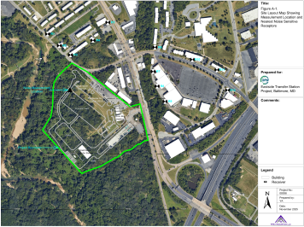
The City of Baltimore proposed redeveloping the Eastern Sanitation Yard at 6101 Bowley’s Lane into the Eastside Transfer Station. The approximately 20.89-acre project included composting operations, residential and small-hauler drop-off facilities, an addition to the administration building, and a transfer station building.
EA Engineering, Science, and Technology, Inc., PBC engaged Apex Acoustics to evaluate potential construction and operational noise and vibration impacts in support of the project’s SWIFR Programmatic Environmental Assessment.
The proposed facility would introduce new activities, equipment, and vehicle movements near noise-sensitive uses, including residences, schools, churches, and healthcare facilities. The assessment required establishing existing acoustic conditions, predicting construction and operational noise and vibration levels, evaluating potential impacts against applicable criteria, and identifying appropriate mitigation measures and best management practices.
Apex combined field measurements with predictive acoustic modeling to evaluate potential noise and vibration impacts. A 24-hour sound survey characterized existing acoustic conditions, and the assessment evaluated 12 sensitive receptor locations within approximately one-half mile of the project boundary.
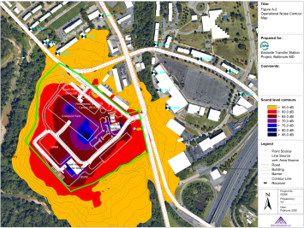
A three-dimensional CadnaA model predicted operational sound levels from facility equipment, transfer station activities, and additional vehicle traffic. Construction noise was evaluated using FHWA methodology, and construction vibration was assessed using Caltrans guidance.
The analysis also identified noise-control measures and operational practices for potential incorporation into the project.
Sensitive receptor locations evaluated
Predicted operational sound levels across sensitive receptors
Predicted construction vibration relative to the assessment’s damage criterion for residential buildings
The assessment concluded that construction and operational noise impacts would be less than significant under the SWIFR environmental review framework with the identified controls and best management practices in place. Mitigation measures included strategically locating noisy equipment away from sensitive receptors to reduce community noise exposure.
Predicted peak-hour operational sound levels remained below the State of Maryland and Baltimore City Health Code limits applied in the assessment.
Construction vibration impacts were also predicted to be less than significant with standard controls, while operational vibration was not expected to produce a measurable impact.
Apex Acoustics provides sound measurement, predictive modeling, impact assessment and mitigation design for industrial, infrastructure, commercial and development projects.